Ancona Duck Colors
Black
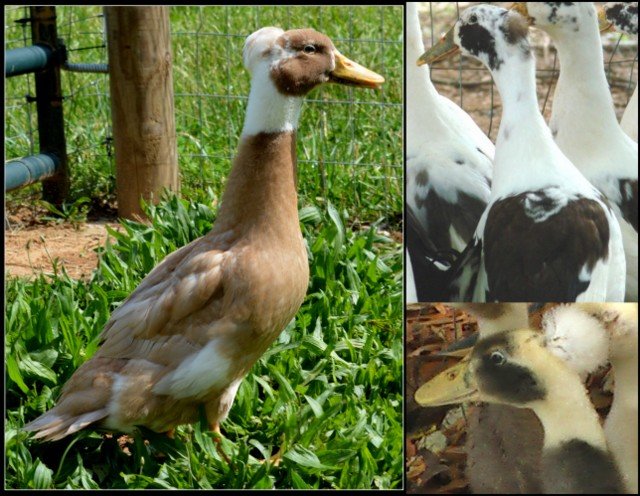
The most routinely-seen color in the breed and definitely the most striking! Black is dominant to all other colors. Sometimes, Pencilling will occur on the chest. It is advisable to breed away from this tendency.
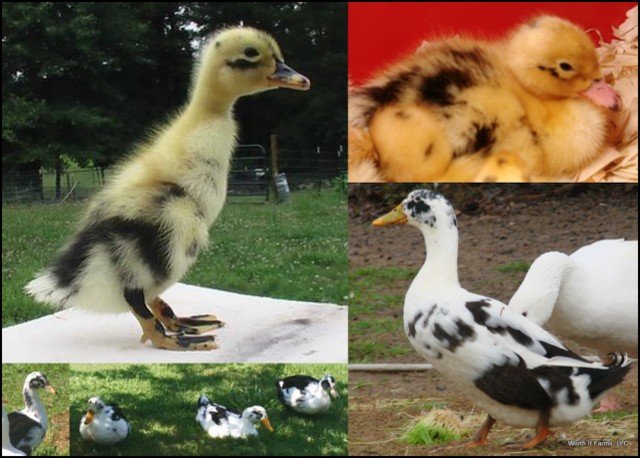
Chocolate
The second most common color which is recessive to black. This color is sex-linked. Meaning if you mate:
Chocolate Drake X Black duck : 50% Black (all males carrying Chocolate); 50% Chocolate (all females)
Black Drake X Chocolate duck: 100% Black - but only males will carry the Chocolate gene
If you are in need of sexing offspring as soon as they hatch, this is the color for you!
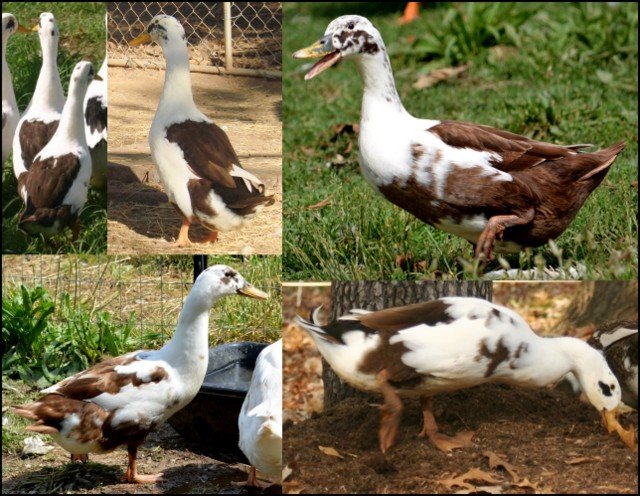
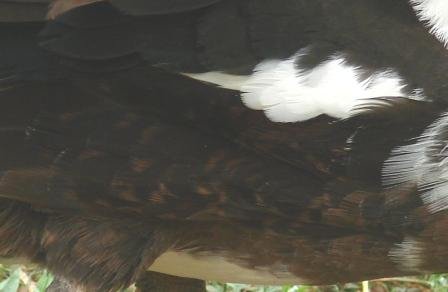
There is a lighter "chocolate" that is actually the chocolate gene combined with the buff gene. This isn't necessarily a sign of cross-breeding, it comes from the breed's origin. I haven't had the opportunity to find out if it is an "accepted" color or one to breed away from. I will warn that it CAN show up in this breed.
(Picture examples coming soon.)
Lavender
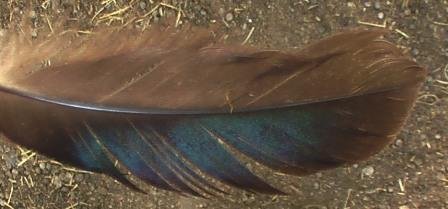
Lavender is a deep purple-grey color that fades before molting and with age. Genetically, these birds are a combination of the Chocolate gene and one Blue gene. Sometimes the Chocolate gene will bleed through, producing isolated Chocolate feathers scattered in the Lavender ones.
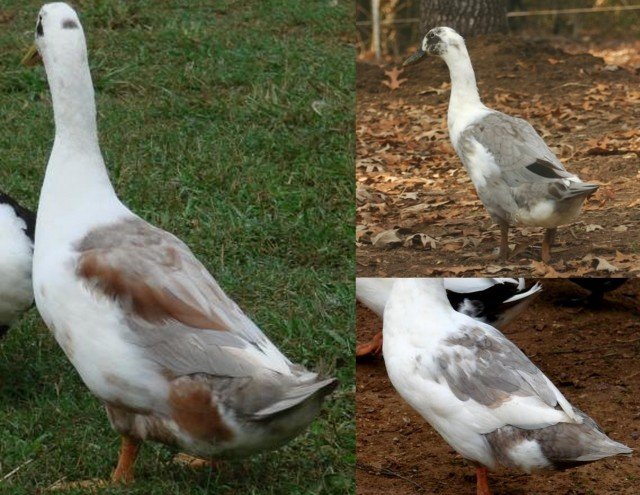
Lilac
Similar to Lavender, but distinctly lighter when young. This color is the result of the Chocolate gene and Two Blue genes. Another way to think of it: Silver with Chocolate. Easily confused with Lavender. Breeding trials, a skilled eye, or both may be needed to differentiate.
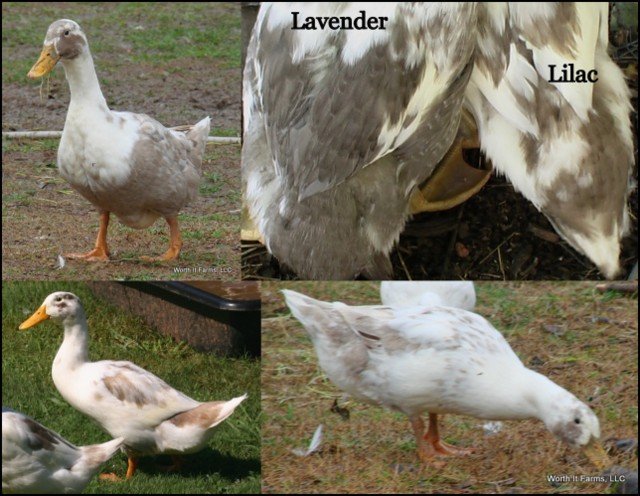
Blue
Blue is incompletely dominant (one copy of the gene gives you blue, two gives you silver). The genetics act the same as Black/Blue/Splash in chickens. Especially well marked Blues will develop a red/brown rust on their chests (even blending into their shoulders and belly), this is not a fault as it is in other breeds. It's merely par for the course. Like Lavender & Lilac, Blue can have "bleed through" from the black gene, resulting in black feathers scattered on Blue feathers.
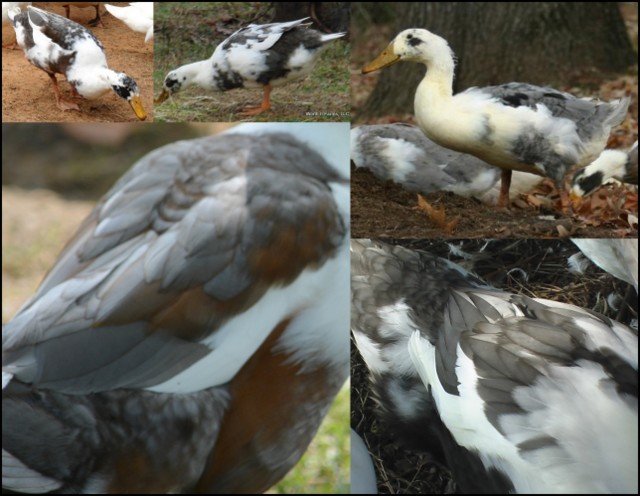
Silver
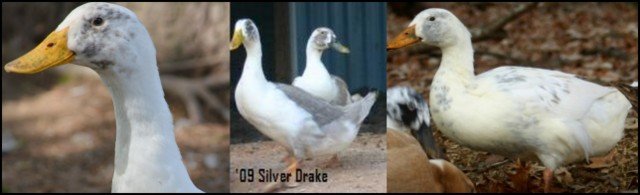
Silver is still the rarest color. It is a double recessive; a dilute of blue. Same as "splash" in chickens. Visually, they are a very light grey which is typically scattered about haphazardly. They have more of a blue undertone, whereas the lavender/lilac has a brown undertone. We are working on having more of these available that are well-marked.
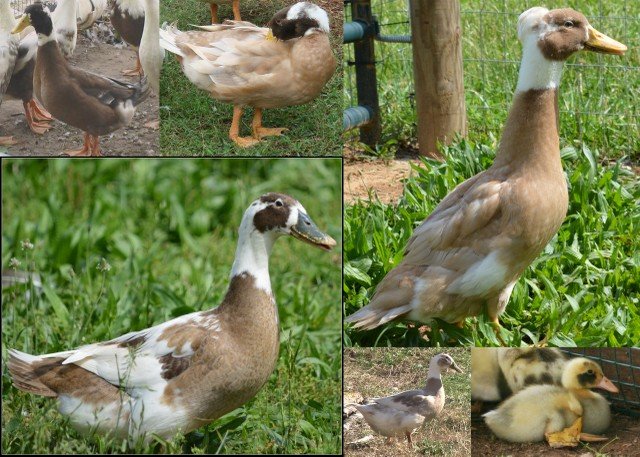
*The following aren't colors, just results of additional genes acting on colors or the whole bird. *